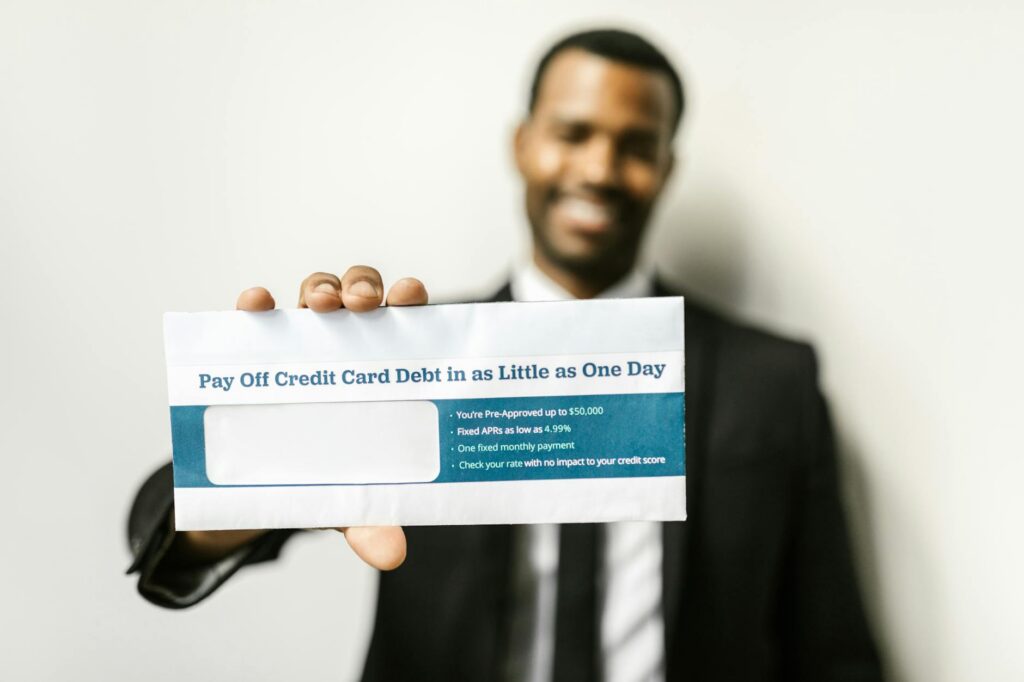
The Complete Guide to Credit Card Debt Payoff: Strategies That Work
Credit card debt is one of the most common financial challenges Americans face today. With average credit card balances exceeding $6,000 per household and interest rates climbing into the double digits, paying off credit card debt requires a clear strategy and commitment. Whether you’re carrying a balance of $2,000 or $20,000, understanding the right approach to credit card debt payoff can save you thousands of dollars in interest and help you achieve financial freedom years sooner than you might think.
This comprehensive guide walks you through proven credit card debt payoff strategies, explains how interest works against you, and shows you exactly how to create a personalized payoff plan that fits your situation.
Understanding Your Credit Card Debt Problem
Before you can solve a problem, you need to understand it fully. Credit card debt is particularly dangerous because of how interest compounds. If you have a $5,000 balance on a card charging 18% APR and only make minimum payments of around 2% of your balance, you’ll pay approximately $4,500 in interest alone before the debt is eliminated—extending your payoff timeline to nearly 10 years.
Start by gathering all your credit card statements and writing down three key numbers for each card: the total balance, the annual interest rate (APR), and the minimum monthly payment. This audit reveals your true debt picture. Many people are shocked to discover they’re carrying balances across 3-5 different cards, each with different interest rates and terms.
Understanding that credit card companies structure minimum payments to keep you in debt longer is crucial. A $10,000 balance at 19% APR might have a minimum payment of just $200, but only $158 of that goes toward the principal in month one—the rest vanishes as interest. This is why paying minimums alone is a recipe for decades of payments.
The Two Most Effective Credit Card Debt Payoff Methods
The Debt Avalanche Method focuses on interest rate efficiency. List all your credit card debts from highest to lowest interest rate. Make minimum payments on everything, then attack the highest-rate card with every extra dollar you can find. This mathematically minimizes the total interest you’ll pay because high-interest debt is costing you the most money each month. If you’re motivated by financial optimization and your highest-rate card has a 21% APR, this method will save you significantly compared to paying off lower-rate cards first.
The Debt Snowball Method prioritizes psychological wins. List debts from smallest to largest balance regardless of interest rate. Pay minimums on everything, then throw extra money at the smallest balance. Once that’s paid off, you get a quick victory that builds momentum. Then you take that payment and roll it into the next-smallest debt, creating a “snowball” effect. While you’ll pay slightly more interest overall, many people find this method more motivating because they see progress faster.
Research shows that psychological momentum matters. People who use the snowball method are 34% more likely to stay committed to their payoff plan compared to those who use the avalanche method but feel discouraged by slow progress on a large, high-rate card.
Creating Your Credit Card Debt Payoff Plan
A solid payoff plan has five components. First, choose your method—avalanche for mathematical optimization or snowball for motivation. Second, calculate your payoff timeline. If you’re paying $200 monthly toward a $5,000 balance at 18% APR, you’re looking at roughly 30 months. Third, identify extra money in your budget. Even an additional $50 monthly cuts your payoff time significantly—that same $5,000 debt with $250 monthly payments instead of $200 means you’ll be debt-free in about 22 months instead of 30, saving you roughly $800 in interest.
Fourth, consider a balance transfer if you qualify. Many cards offer 0% APR for 6-21 months on transferred balances. If you can move a $3,000 balance to a 0% card and pay it down aggressively during the promotional period, you eliminate interest charges entirely. However, balance transfer fees typically run 3-5%, so this strategy only works if you can pay off most of the balance before the promotional rate expires.
Fifth, avoid accumulating new debt. Cut up cards if necessary or freeze them in ice as a physical reminder. Each new charge undermines your payoff progress and extends your timeline.
Accelerating Your Credit Card Debt Payoff
If you want to shorten your payoff timeline beyond your regular budget allows, consider these acceleration strategies. Sell unused items—that closet full of clothes, electronics, or furniture could generate $500 to $2,000 in quick cash. Direct every dollar from a garage sale or online marketplace directly to your highest-priority debt.
Increase your income through a side gig, freelance work, or asking for a raise at your current job. Even 5 hours weekly of freelance work at $25 per hour generates $500 monthly toward debt payoff. Over 24 months, that’s $12,000 in additional payments—potentially the difference between being debt-free in 2 years versus 4.
Cut expenses strategically. Review your subscriptions and memberships—streaming services, gym memberships, app subscriptions typically total $100-$200 monthly that most people don’t miss. Meal planning and cooking at home instead of dining out can free up another $150-$300 monthly. Redirect these savings to debt payoff rather than lifestyle upgrades.
Negotiate lower interest rates. Call your credit card companies and ask for a lower APR, especially if you have good payment history. Even reducing your rate from 19% to 15% meaningfully decreases total interest paid. Getting approved for a personal loan at 10-12% to pay off higher-rate cards is another valid option for those with decent credit scores.
Avoiding Common Credit Card Debt Payoff Mistakes
Many people sabotage their own progress by making preventable mistakes. Closing paid-off accounts harms your credit utilization ratio and credit score—leave them open but unused. Missing payments during your payoff journey triggers late fees, higher interest rates, and credit score damage that lasts years. Ignoring your plan when unexpected expenses arise is another killer. Build a small emergency fund ($500-$1,000) alongside your debt payoff efforts so that car repairs or medical costs don’t force you back to credit cards.
Neglecting to track progress makes the journey feel endless. Update your total debt figure monthly and celebrate milestones—when you hit 50% payoff, you’re halfway there. Documenting that you’ve eliminated $3,000 of $6,000 in debt provides psychological fuel to continue.
Frequently Asked Questions
How long does credit card debt payoff typically take?
Payoff timelines vary dramatically based on your balance, interest rate, and monthly payment. A $3,000 balance at 15% APR paid at $200 monthly takes about 16 months, while a $10,000 balance at 20% APR with $250 monthly payments takes about 52 months. Using our free debt payoff calculator lets you input your exact numbers to see your personalized timeline.
Should I pay off credit cards or build an emergency fund first?
Build a small emergency fund of $500-$1,000 first, then prioritize debt payoff. This prevents high-interest credit card charges when unexpected expenses arise. Once you’re debt-free, rapidly expand your emergency fund to 3-6 months of expenses.
Does paying off credit card debt improve my credit score?
Yes, but not immediately. Paying down balances lowers your credit utilization ratio, which improves your score over 1-3 months. Continuing to make on-time payments throughout your payoff journey further boosts your score. However, closing accounts after payoff can temporarily dip your score.
Is debt consolidation a good option for credit card debt payoff?
Debt consolidation through a personal loan or balance transfer can work if the new interest rate is significantly lower than your current cards and you commit to not accumulating new debt. Consolidation doesn’t reduce your total debt—it just reorganizes it—so it only helps if the lower rate accelerates payoff.
What should I do after paying off my credit cards?
Redirect the money you were paying toward debt into savings and investments. If you were paying $300 monthly toward credit cards, invest that $300 monthly into retirement accounts or taxable investments. Over 20 years at 7% returns, that becomes approximately $133,000—the true benefit of becoming debt-free.
Conclusion
Credit card debt payoff is absolutely achievable with the right strategy and commitment. Whether you choose the debt avalanche method for mathematical efficiency or the debt snowball method for psychological momentum, the key is selecting a plan and executing it consistently. Accelerate your payoff by finding extra income, cutting non-essential expenses, and negotiating lower interest rates. Avoid common mistakes like closing paid-off accounts or abandoning your plan during setbacks.
Your path to financial freedom starts with understanding your debt and committing to a payoff timeline. The longer you wait, the more interest you’ll pay. Most people can become credit card debt-free within 18-48 months with focused effort.
Use Our Free Debt Payoff Calculator
Stop guessing about your credit card debt payoff timeline. Head to debtcalcpro.com and use our free debt payoff calculator to input your exact balances, interest rates, and monthly payment amount. You’ll instantly see your personalized payoff timeline, total interest cost, and how much you’ll save by increasing your monthly payment by just $50 or $100. Our calculator helps you compare the debt avalanche versus
- YNAB (You Need A Budget) – Budgeting Software — Helps users track spending and create debt payoff plans with proven behavioral change methodology, directly supporting credit card debt elimination strategies
- Nerd Wallet Credit Card Payoff Calculator — Complements debt payoff education with comparative tools and affiliate partnerships for balance transfer cards that help consolidate high-interest debt
- Amazon – Personal Finance Books (Dave Ramsey, Suze Orman) — Readers seeking deeper debt elimination strategies benefit from bestselling personal finance books with affiliate commission opportunities
SPONSORED
AI-Powered Credit Monitoring & Repair
Franklin AI monitors your credit 24/7 and automatically disputes errors that may be dragging your score down. Start improving your credit today.
Start Free Trial →Affiliate partner — we may earn a commission at no cost to you.
SPONSORED
Split Purchases Into 4 Interest-Free Payments
Klarna lets you shop now and pay over time — no interest, no fees when you pay on time. Used by 150M+ shoppers worldwide.
Get the Klarna App →Affiliate partner — we may earn a commission at no cost to you.