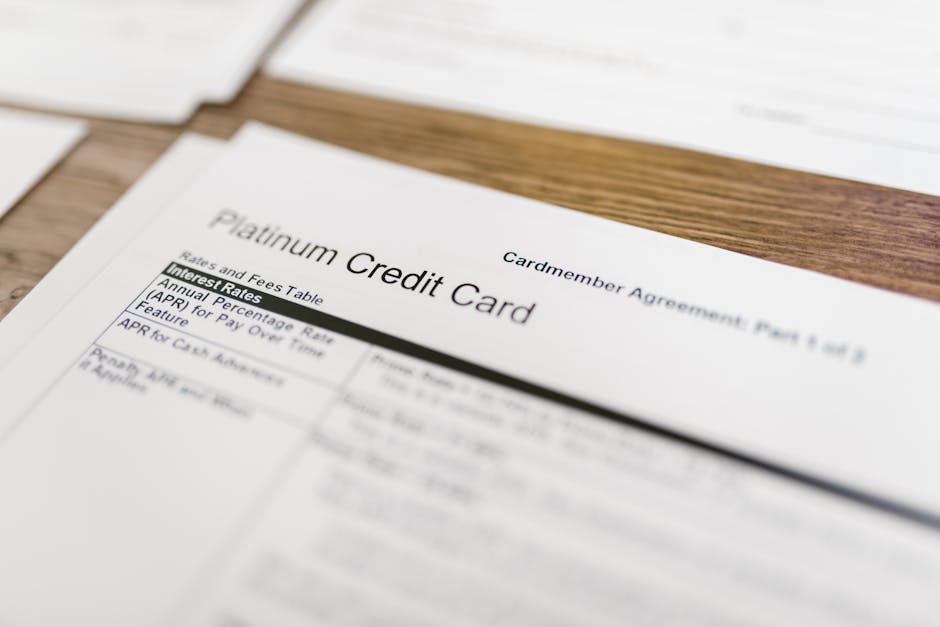
APR (Annual Percentage Rate) directly determines how much extra you pay on top of what you borrowed. A higher APR means more of each payment goes toward interest instead of principal, extending your payoff timeline and inflating your total cost. Even a 2–3% APR difference can add hundreds — or thousands — of dollars to your debt over time. (Related: HELOC vs Home Equity Loan Rates: June 2026 Comparison and When to Refinance) (Related: Credit Card Payoff: The Complete Guide to Eliminating Your Balance in 2026) (Related: Complete Guide: Negative Information on Credit Reports in 2026) (Related: How to Use Refinance Mortgage Rates to Optimize Your Debt Payoff Strategy) (Related: Minimum Payment Calculator: Stop Paying More Than You Should) (Related: 7 Proven Steps to Budget While in Debt in 2026)
What APR Actually Means and How It’s Calculated
Many borrowers confuse APR with a simple interest rate, but they’re not the same thing. According to the Consumer Financial Protection Bureau (CFPB), APR includes not just the interest rate but also certain fees and costs associated with the loan, expressed as a yearly rate. This makes APR a more complete picture of borrowing cost than the stated interest rate alone.
The Math Behind APR
Your lender converts your APR into a daily or monthly periodic rate to calculate how interest accrues on your balance. For a credit card with 24% APR, the monthly periodic rate is 24% ÷ 12 = 2%. On a $5,000 balance, that’s $100 in interest charges in the very first month — before you’ve paid a single dollar toward principal.
Here’s why this compounds so aggressively:
- Minimum payments are mostly interest: Early in repayment, a large share of your minimum payment covers interest, leaving very little to reduce principal.
- Daily compounding amplifies costs: Many credit cards compound interest daily, meaning your effective rate is slightly higher than the stated APR.
- Balance transfers reset the clock: Moving debt doesn’t eliminate the underlying APR problem unless you secure a genuinely lower rate.
APR vs. APY — Why the Difference Matters
APY (Annual Percentage Yield) accounts for compounding within the year. A 24% APR compounded daily produces an APY closer to 27.1%. Lenders are required to disclose APR under the Truth in Lending Act, but understanding APY gives you a truer sense of annual interest cost. Always check which figure a lender is quoting before comparing loan offers.
How Small APR Differences Create Big Cost Gaps
The real danger of a high APR isn’t visible in any single monthly statement — it accumulates invisibly across months and years. Let’s put some realistic numbers on it.
Side-by-Side Comparison: $10,000 at Different APRs
Assume a $10,000 personal loan with a 36-month repayment term:
- 8% APR: Monthly payment ≈ $313 | Total interest paid ≈ $1,267
- 18% APR: Monthly payment ≈ $362 | Total interest paid ≈ $3,015
- 29% APR: Monthly payment ≈ $415 | Total interest paid ≈ $4,940
That’s a difference of nearly $3,700 between the lowest and highest rate — on the exact same loan amount and term. Now imagine carrying that high APR on revolving credit card debt with no fixed payoff date. The total cost can multiply several times over.
The Minimum Payment Trap
High APR becomes especially damaging when borrowers make only minimum payments. On a $6,000 credit card balance at 22% APR, paying only the minimum (roughly 2% of the balance) could take over 20 years to pay off and cost more than $8,000 in interest alone — meaning you pay more in interest than the original debt itself. Use our credit card payoff calculator to see exactly how your current APR extends your timeline.
Fixed vs. Variable APR Risk
Fixed APR stays constant for the life of the loan, giving you predictable payment amounts. Variable APR fluctuates with benchmark rates like the prime rate. In a rising-rate environment — like borrowers experienced from 2022 through 2024 — a variable APR can jump several percentage points, dramatically increasing monthly costs and total debt burden with no warning.
Strategies to Reduce the Impact of APR on Your Debt
Understanding APR’s impact is only useful if it leads to action. Here are the most effective approaches to neutralize high APR costs.
1. Negotiate or Refinance Your Rate
Many borrowers don’t realize that credit card APRs are sometimes negotiable. According to the CFPB’s credit card resource center, cardholders with good payment history can contact their issuer directly and request a rate reduction. Additionally, refinancing high-APR credit card debt into a lower-rate personal loan can immediately cut interest accrual and set a fixed payoff date.
2. Apply the Avalanche Method
The debt avalanche strategy directs every extra dollar toward the account with the highest APR first, while making minimums on all others. This is mathematically the most efficient approach — it destroys the accounts that are costing you the most money per day. Once the highest-APR debt is eliminated, you roll that payment to the next highest rate. Try our debt avalanche calculator to model exactly how much interest you’d save with this method on your specific balances.
3. Make Bi-Weekly Payments
Switching from monthly to bi-weekly payments results in one extra full payment per year. On high-APR debt, this reduces the average daily balance — the figure used to calculate interest charges — and can shave months off your payoff date without requiring a higher monthly cash outlay.
How to Use the APR Cost Calculator
Seeing the numbers in abstract terms only goes so far. For a personalized breakdown of exactly how APR is inflating your total debt cost, use our APR cost calculator. Simply enter your current balance, APR, and monthly payment amount. The tool will show you total interest paid, your full payoff date, and how different scenarios — like a lower APR or a larger payment — would change your outcome. Running these numbers before making any debt decision is a fast, free way to make smarter choices with real data.
Frequently Asked Questions
Does a lower APR always mean a cheaper loan?
Not necessarily. Some loans with low APRs include heavy origination fees or prepayment penalties that raise the true cost. Always compare the total repayment amount — principal plus all fees and interest — not just the APR figure in isolation.
How often does APR change on credit cards?
Variable APRs can change as often as monthly, tied to the prime rate or another benchmark index. Your card issuer must notify you at least 45 days in advance of most rate increases under federal regulations, giving you a window to pay down the balance or transfer it before the higher rate takes effect.
Is 0% APR promotional debt actually free?
Only if paid in full before the promotional period ends. Most 0% APR offers include deferred interest clauses — if any balance remains when the promo period expires, you may be charged interest backdated to the original purchase
- Debt Payoff Planner Spreadsheet Templates — Complements the APR breakdown by helping readers track and visualize how different APR rates affect their total payoff costs and timelines
- Credit Score Improvement Guide & Credit Monitoring Service — Higher credit scores lead to lower APRs; readers learning about APR impact will want resources to improve their creditworthiness and secure better rates
- Financial Calculator – Advanced Loan & Debt Calculator Device — Practical tool for readers to manually calculate APR impacts on various loans, reinforcing the concepts covered in the post with hands-on calculation
See also: Debt Payoff Calculator: The Complete Guide to Paying Off Debt Faster in 2026
See also: The Debt Snowball Method: How to Pay Off Debt Faster in 2026
See also: Credit Utilization Ratio: 5 Proven Ways to Fix It in 2026
SPONSORED
AI-Powered Credit Monitoring & Repair
Franklin AI monitors your credit 24/7 and automatically disputes errors that may be dragging your score down. Start improving your credit today.
Start Free Trial →Affiliate partner — we may earn a commission at no cost to you.
SPONSORED
Split Purchases Into 4 Interest-Free Payments
Klarna lets you shop now and pay over time — no interest, no fees when you pay on time. Used by 150M+ shoppers worldwide.
Get the Klarna App →Affiliate partner — we may earn a commission at no cost to you.