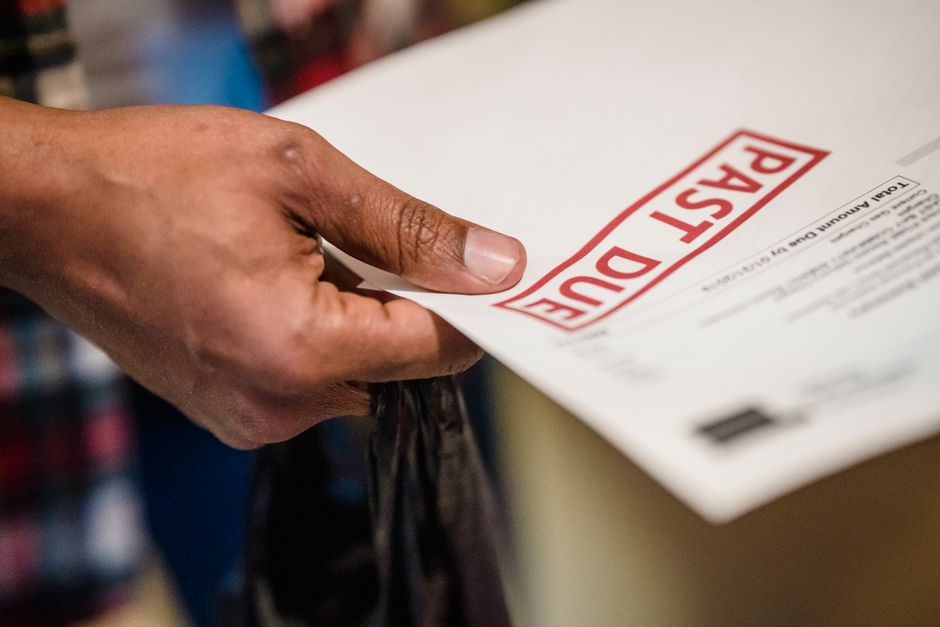
Late payments can drop your credit score by 50-200 points and stay on your report for 7 years. Recovery typically takes 3-6 months with responsible payments, though rebuilding full credit strength requires 12-24 months of positive payment history and lower credit utilization. (Related: How Rising HELOC and Home Equity Loan Rates Affect Your Debt Strategy in 2026) (Related: Personal Loan Payoff Calculator: Crush Debt Faster in 2025) (Related: Credit Card Payoff: The Complete Guide to Eliminating Debt Faster) (Related: Credit Card Debt Crisis 2024: Warning Signs, Comparison to 2008, and Debt Management Strategies) (Related: 5 Proven Ways to Get Out of Debt on a Single Income in 2026) (Related: Home Equity Loan for Debt Consolidation: 5 Essential Facts for 2026)
How Late Payments Impact Your Credit Score
Payment history is the single largest factor in your credit score, accounting for 35% of your FICO score calculation. When a payment goes 30 or more days past due, lenders can report it to the credit bureaus — and the damage hits fast.
According to the Consumer Financial Protection Bureau (CFPB), negative items like late payments can legally remain on your credit report for up to seven years from the original delinquency date. The severity of the drop depends on several key factors:
- How late the payment was: 30 days late causes less damage than 60 or 90 days late.
- Your starting credit score: Higher scores take harder hits. A score of 780 may drop 90-110 points from a single 30-day late payment, while a 680 score may drop 60-80 points.
- How recent the late payment is: Older late payments carry less weight in scoring models.
- Number of late payments: Multiple late payments compound the damage significantly.
The FICO scoring model treats 90-day late payments and 120-day late payments especially harshly — often classifying them alongside collections and charge-offs in terms of score impact. Understanding this severity scale is critical for planning your late payments credit score recovery strategy.
Credit Score Recovery Timeline After Late Payments
How long does it take to recover from a late payment?
The credit score recovery timeline varies based on your overall credit profile, but here is a realistic breakdown based on standard scoring behavior:
- Months 1-3: Stabilization phase. No new late payments, credit utilization begins to decrease. Score may show modest improvement of 10-20 points.
- Months 3-6: Active recovery begins. Consistent on-time payments start to rebuild positive payment history. Expect 20-40 point gains if no additional negative marks appear.
- Months 6-12: Meaningful progress. Rebuilding credit after late payments accelerates as the age of the late payment increases. Scores can climb 40-80 points depending on utilization and account mix.
- Months 12-24: Full strength rebuild. With sustained positive behavior — on-time payments, low utilization, no new negative items — most consumers return to pre-delinquency score ranges within two years.
One important note: how long a late payment affects your credit score is tied to both its age and the surrounding account behavior. A late payment surrounded by years of on-time payments loses scoring weight much faster than one sitting in a thin or damaged credit file.
Can you remove late payments from your credit report?
Yes — but only under specific circumstances. You have two legitimate options:
- Dispute inaccurate information: If the late payment was reported in error — wrong date, wrong amount, or an account you don’t recognize — you can file a dispute with the credit bureaus. Under the Fair Credit Reporting Act, bureaus must investigate and correct verifiable errors. The CFPB’s credit reporting tools explain how to initiate this process correctly.
- Goodwill deletion request: If the late payment was accurate but was a one-time mistake, you can write a goodwill letter to your creditor asking them to remove it as a courtesy. This is not guaranteed, but creditors with whom you have a long positive history sometimes agree — especially for isolated incidents.
What you cannot do is legally pay a third-party service to remove accurate, verified late payments. Any company making that promise is misrepresenting what credit repair can deliver.
Step-by-Step Guide to Rebuilding Your Credit
Rebuilding credit after late payments is methodical, not magical. Here is the proven sequence that produces the most reliable results:
- Stop the bleeding first. Before anything else, bring all past-due accounts current. Even partial payments can prevent accounts from rolling into collections or charge-off status.
- Set up autopay for minimums. Never miss another payment. Configure automatic minimum payments on every account so that a forgotten due date never costs you another 30-day late mark.
- Aggressively reduce credit utilization. Aim to keep balances below 30% of each card’s credit limit — and ideally below 10% for maximum scoring benefit. Utilization is recalculated monthly, so improvements show up quickly.
- Avoid applying for new credit immediately. Each hard inquiry can subtract 5-10 points temporarily. Wait at least 6 months after a late payment before applying for new credit unless absolutely necessary.
- Consider a secured credit card. If your score has dropped significantly, a secured card used responsibly for small recurring purchases and paid in full monthly can rebuild positive history efficiently.
- Monitor your credit reports monthly. Track progress, catch errors early, and confirm that creditors are reporting your on-time payments accurately. You are entitled to free weekly reports through the official federally mandated system.
- Let time work for you. Resist the urge to close old accounts. Account age and credit mix both support your score as your credit history lengthens.
Tools and Calculators for Credit Recovery Tracking
Tracking your recovery progress with real numbers keeps you motivated and helps you make smarter payoff decisions. The debt and credit tools at DebtCalcPro are built specifically for this work.
Use the Debt Payoff Calculator to model how quickly you can reduce balances across multiple accounts — directly lowering your utilization ratio and accelerating your credit score recovery timeline. Enter your current balances, interest rates, and monthly budget to see exactly which accounts to prioritize.
Combining a clear payoff schedule with monthly credit monitoring gives you two levers to pull simultaneously: reducing what you owe and confirming the positive reporting is landing correctly on your report.
Frequently Asked Questions
Does a 30-day late payment affect your credit score as much as a 90-day late?
No. A 30-day late payment causes meaningful damage but significantly less than a 90-day late. FICO scoring models treat delinquency severity as a graduated scale — the longer the payment goes unpaid, the worse the score impact and the longer the recovery period required.
Will paying off a collection account remove it from my credit report?
Paying a collection account does not automatically remove it from your report. It will update to show a zero balance and “paid” status, which is positive — but the account history can remain for up to seven years from the original delinquency date. Some creditors offer “pay for delete” arrangements, though this is not a guaranteed right.
How many on-time payments does it take to recover from a late payment?
There is no fixed number
- Credit Monitoring Service – Experian — Essential for tracking credit score recovery progress after late payments; allows users to monitor their 7-year reporting period and see improvements in real-time
- Secured Credit Card – Capital One Secured — Helps rebuild credit after late payments by enabling responsible payment history; perfect complement to the 12-24 month recovery timeline mentioned in the post
- Personal Loan – LendingClub — Allows debt consolidation of late payment accounts and creation of new positive payment history to accelerate credit score recovery during the 3-6 month initial recovery phase
Related: Charge-Off Accounts: The Complete 2026 Guide to Handling Them
Related: Complete Guide: Negative Information on Credit Reports in 2026
Related: Complete Guide: Negative Information on Credit Reports in 2026
SPONSORED
AI-Powered Credit Monitoring & Repair
Franklin AI monitors your credit 24/7 and automatically disputes errors that may be dragging your score down. Start improving your credit today.
Start Free Trial →Affiliate partner — we may earn a commission at no cost to you.
SPONSORED
Split Purchases Into 4 Interest-Free Payments
Klarna lets you shop now and pay over time — no interest, no fees when you pay on time. Used by 150M+ shoppers worldwide.
Get the Klarna App →Affiliate partner — we may earn a commission at no cost to you.