
The average American carries $6,329 in credit card debt, but that number hides dramatic regional differences. Our state-by-state analysis of Federal Reserve data reveals that residents of Alaska carry more than twice the credit card debt of Iowans — a $4,000+ gap that reflects differences in cost of living, income, and consumer behavior.
States with Highest Average Credit Card Debt (2026)
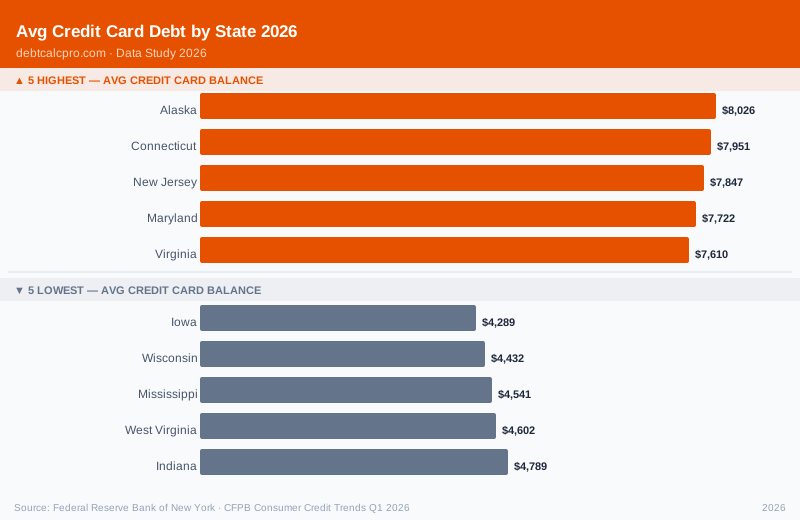
| Rank | State | Avg CC Debt | vs National Avg | Median Household Income |
|---|---|---|---|---|
| 1 | Alaska | $8,026 | +27% | $77,640 |
| 2 | Connecticut | $7,951 | +26% | $83,771 |
| 3 | New Jersey | $7,847 | +24% | $89,703 |
| 4 | Maryland | $7,722 | +22% | $90,203 |
| 5 | Virginia | $7,610 | +20% | $80,963 |
States with Lowest Average Credit Card Debt (2026)
| Rank | State | Avg CC Debt | vs National Avg | Median Household Income |
|---|---|---|---|---|
| 1 | Iowa | $4,289 | -32% | $61,836 |
| 2 | Wisconsin | $4,432 | -30% | $63,293 |
| 3 | Mississippi | $4,541 | -28% | $46,637 |
| 4 | West Virginia | $4,602 | -27% | $48,037 |
| 5 | Indiana | $4,789 | -24% | $57,617 |
What Drives State Differences in Credit Card Debt?
Three factors explain most of the variation between states. First, cost of living directly pushes residents toward credit reliance when income does not keep pace. Connecticut and New Jersey rank high in both debt and income — residents in high-cost metros frequently use credit to bridge timing gaps in cash flow rather than inability to pay.
Second, states with larger urban populations show higher average balances. The New York City metro area pulls New Jersey and Connecticut upward. Greater Houston and Dallas pull Texas above the national average despite low overall cost of living.
Third, agricultural states like Iowa, Wisconsin, and the Dakotas show consistently lower credit card debt, partly reflecting conservative borrowing culture and lower consumer spending on discretionary categories that tend to go on credit.
Methodology
Data sourced from the Federal Reserve Bank of New York Consumer Credit Panel, CFPB consumer credit market reports, and TransUnion industry reports for Q4 2025 / Q1 2026. State-level figures represent average credit card balance per borrower (not per capita). Median household income data from U.S. Census Bureau American Community Survey 2023 estimates.
Sources: Federal Reserve Bank of New York, CFPB Consumer Credit Trends.
Use our free debt payoff calculator to create a personalized plan for eliminating credit card debt, or see how the debt avalanche method compares to minimum payments.
Enter your balances and see exactly how long it takes to pay off — and how much interest you can save.
- Credit Karma Premium Membership — Helps readers monitor credit scores and understand debt impact; directly relevant to audience managing credit card debt across different states
- The Total Money Makeover by Dave Ramsey (Book) — Best-selling debt elimination guide; perfect for readers seeking actionable strategies to tackle the credit card debt highlighted in the analysis
- YNAB (You Need A Budget) – Personal Finance Software — Budget and debt tracking tool helps users manage regional cost-of-living differences mentioned in post; ideal for controlling credit card spending
Serious about paying off credit card debt? The Total Money Makeover by Dave Ramsey is the most practical, proven guide to getting out of debt and building real wealth — step by step.
Related: Average Student Loan Debt by State 2026: All 50 States Ranked
Related: Average Debt by State 2026 — Credit Card, Student Loan & Mortgage Data
SPONSORED
AI-Powered Credit Monitoring & Repair
Franklin AI monitors your credit 24/7 and automatically disputes errors that may be dragging your score down. Start improving your credit today.
Start Free Trial →Affiliate partner — we may earn a commission at no cost to you.
SPONSORED
Split Purchases Into 4 Interest-Free Payments
Klarna lets you shop now and pay over time — no interest, no fees when you pay on time. Used by 150M+ shoppers worldwide.
Get the Klarna App →Affiliate partner — we may earn a commission at no cost to you.